Table of Contents
| Introduction |
| Evolution of Music Production in the Digital Era
|
| What Is a Music Production Course? |
| Why Music Production Is a Career of the Future |
| Who Should Join a Music Production Course? |
| Eligibility Criteria for Music Production Course |
| Types of Music Production Courses |
| Detailed Music Production Course Syllabus |
| Digital Audio Workstations (DAWs) Explained |
| Sound Design & Music Arrangement |
| Recording Techniques & Studio Knowledge |
| Mixing & Mastering: Professional Audio Skills |
| Music Production Hardware & Studio Setup |
| Career Opportunities After Music Production |
| Freelancing & Independent Music Production |
| Music Production Course in India: Scope & Growth |
| How to Choose the Best Music Production Institute |
| Common Mistakes Beginners Make |
| Myths About Music Production Career |
| FAQs |
| Conclusion |
Introduction
Music is no longer limited to big studios, record labels, or expensive equipment. Today, anyone with creativity, dedication, and the right training can create professional-quality music from their bedroom. This massive transformation has given rise to music production as one of the most powerful creative careers of the modern era.
A Music Production Course helps individuals learn how to create, arrange, record, mix, and master music using advanced digital tools and industry techniques. Whether it’s Bollywood, independent music, EDM, hip-hop, background scores, or OTT content, music producers are in demand everywhere.
Evolution of Music Production in the Digital
Earlier, music production required:
- Expensive analog equipment
- Large recording studios
- Physical instruments
- Huge production teams
Digital Revolution in Music Production:
- DAWs replaced analog tape machines
- Plugins replaced expensive hardware
- Home studios replaced commercial studios
- Online platforms replaced record labels
Because of this evolution, music production courses have become essential for anyone who wants to work professionally in music.
What Is a Music Production Course?
A Music Production Course is a professional training program that teaches the technical, creative, and commercial aspects of music creation.
- How music is composed and structured
- How to use DAW software
- How to record vocals & instruments
- How to mix and master tracks
- How to release and monetize music
The course is designed to turn beginners into industry-ready music producers.
Why Music Production Is a Career of the Future
Reasons Why Music Production Has a Bright Future:
- Explosion of OTT platforms
- Rise of independent artists
- Growth of YouTube, Instagram & Reels
- Gaming & animation industry demand
- Brand advertisements & jingles
🎧 Every piece of content needs sound.
Who Should Join a Music Production Course?
This course is perfect for:
- Aspiring music producers
- DJs who want original tracks
- Singers & rappers
- Instrumentalists
- Film & background score aspirants
- YouTubers & content creators
Detailed Music Production Course Syllabus
A professional syllabus is divided into modules.
- Module 1: Music Theory
- Module 2: DAW Training
- Module 3: Sound Design
- Module 4: Recording Techniques
- Module 5: Mixing
- Module 6: Mastering
Digital Audio Workstations (DAWs) Explained
DAWs are the backbone of music production.
- FL Studio
- Ableton Live
- Logic Pro
- Cubase
Each DAW has its own workflow, but core concepts remain the same.
Sound Design & Music Arrangement
Sound design is the art of creating unique sounds.
- Designing basslines
- Creating leads & pads
- Layering sounds
- Arranging full tracks
This skill separates average producers from professionals.
Recording Techniques & Studio Knowledge
Recording is a crucial part of production.
- Mic placement
- Gain staging
- Noise control
- Vocal processing
A good course teaches studio discipline and professional workflow.
Mixing & Mastering: Professional Audio Skills
Mixing
- Balance all elements
- Clarity & separation
- Emotional impact
- Final loudness
- Industry-ready sound
- Platform optimization
These skills make your music commercially acceptable.
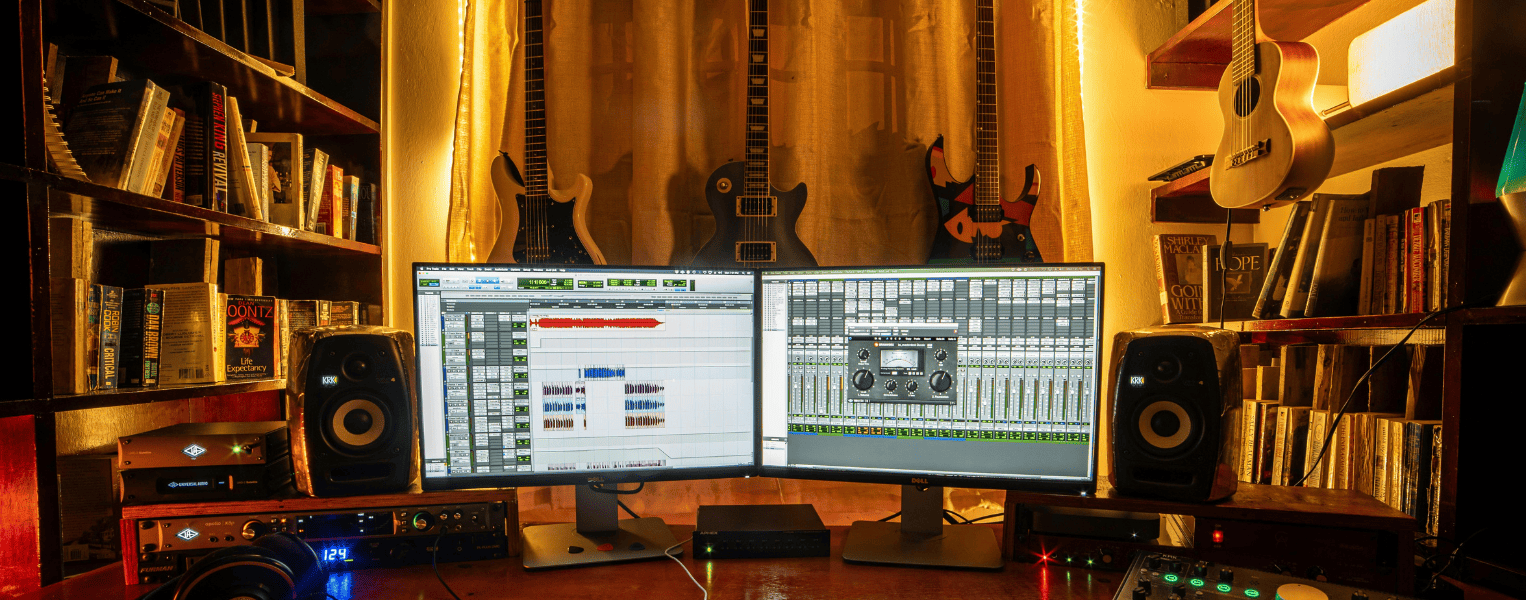
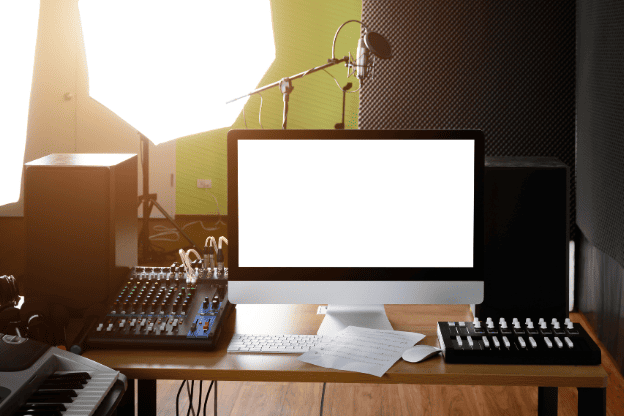
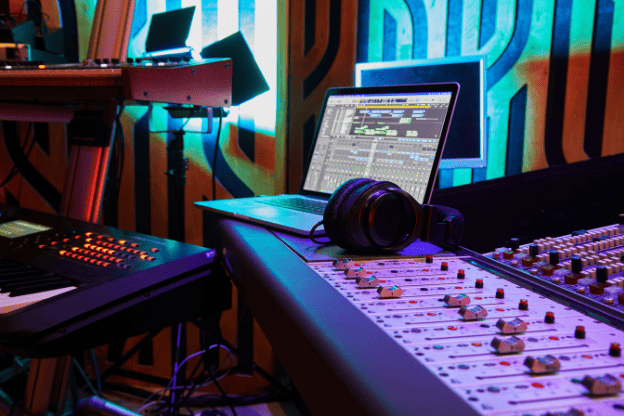
Music Production Hardware & Studio Setup
Essential Equipment:
- Laptop/PC
- Audio interface
- Studio headphones
- MIDI keyboard
- Studio monitors
- Acoustic treatment
- External plugins
💡 You can start small and upgrade gradually.
Career Opportunities After Music Production
You can work as:
- Music Producer
- DJ & Performer
- Film Composer
- Sound Designer
- Music Arranger
- Freelance Producer
- Music Trainer
Freelancing & Independent Music Production
Music producers can earn via:
- Spotify & Apple Music
- YouTube monetization
- Freelancing platforms
- Brand collaborations
- Live performances
Music Production Course in India: Scope & Growth
India’s music industry is growing rapidly due to:
- Digital platforms
- Independent artists
- OTT content boom
- Gaming & animation
The demand for trained producers is at an all-time high.
How to Choose the Best Music Production Institute
- Experienced faculty
- Updated curriculum
- Studio facilities
- Placement support
- Portfolio-based learning
Common Mistakes Beginners Make
- Ignoring music theory
- Copying others blindly
- Skipping mixing practice
- Expecting instant success
Myths About Music Production Career
- Needs expensive gear
- No stable income
- Only DJs succeed
- Only DJs can become producers
- Music production has no future
How to Choose the Best Music Production Institute
- Industry-experienced faculty
- Updated curriculum
- Studio access
- Placement support
- Portfolio development
- Real project training
Avoid institutes that promise instant fame.
Skills Required to Become a Music Producer
- Creativity & originality
- Good listening skills
- Basic music sense
- Technical understanding
- Patience & consistency
- Marketing & networking
FAQ (Frequently Asked Questions)
- Q1. Is music production a good career?
- Yes, it offers creativity, income, and global reach.
- Q2. Can beginners join?
- Absolutely. RSFI offers beginner-friendly courses.
- Q3. Do I need drawing skills?
- No, a basic setup is enough initially.
- Q4. How long to become professional?
- 6 months to learn basics, 1–2 years to master.
- Q5. Can I earn online?
- Yes, through freelancing and streaming platforms.
Conclusion
A Music Production Course is more than education—it is a career transformation. If you love music, creativity, and technology, this field offers unlimited growth and freedom.
Learn the skill. Create the sound. Build your future.
A Music Production Course is not just a course—it’s a career-shaping journey. If music excites you, if sound inspires you, and if creativity drives you, then music production is the perfect field.
With the right training, practice, and mindset, you can turn your passion into a global profession.